

TOBACCO BILL
Government overreach disguised as public health
The Tobacco Products and Electronic Delivery Systems Control Bill, better known as the Tobacco Bill, represents one of the most intrusive pieces of legislation yet considered by South Africa’s government. Under the guise of protecting public health, the Bill extends sweeping powers to the state, imposing restrictions that go far beyond reasonable regulation.
TOBACCO BILL EXPLAINED


IF PASSED, THE BILL WOULD:
- Ban designated smoking areas in restaurants, bars, and many workplaces.
- Enforce plain packaging for all tobacco and vaping products, stripping away branding and choice.
- Criminalise certain displays and marketing, further eroding freedom of expression.
- Grant the Minister sweeping powers over every aspect of tobacco and vaping products, from packaging, warnings, and ingredients to flavours, sales, and distribution. The Minister may also issue any regulation deemed necessary to “further the objectives of the Act,” effectively holding sovereign authority to ban smoking and vaping nationwide if claimed to be in the public interest.
In practice, this amounts to prohibition by stealth.
FREEDOM OF CHOICE IS UNDER THREAT
The FMF supports policies that encourage education, informed decisions, and respect for individual responsibility. What the Tobacco Bill proposes, however, is not education. It is coercion. It presumes that adults cannot make their own choices, and that government must step in to dictate behaviour through punishment and control.
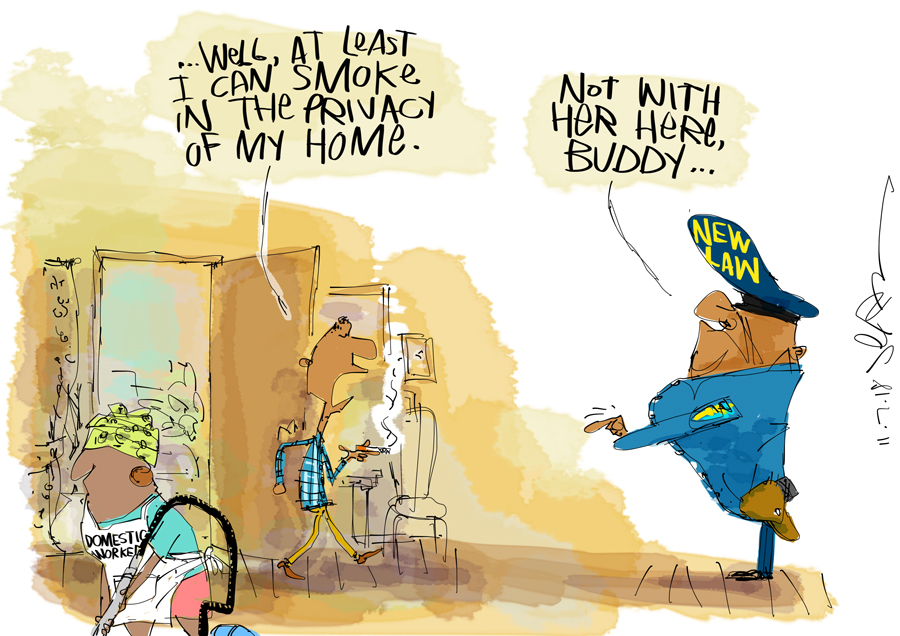
The intrusion goes so far that the Bill would even regulate smoking and vaping inside the privacy of one’s own home if it is deemed to affect others, setting a dangerous precedent for state intrusion into personal space.
Plain packaging, for example, has been tried in countries like Australia with no measurable success in reducing smoking rates. Instead, it has fuelled illicit trade, weakened intellectual property rights, and harmed legitimate businesses. South Africa, already struggling with one of the world’s largest illegal cigarette markets, risks making the problem even worse.
THE CONSEQUENCES
- Jobs and small businesses in the tobacco and vaping supply chain will face enormous strain.
- Tax revenue, already under threat due to illicit trade, will decline further.
- Law enforcement resources, already stretched thin, will be diverted to chase smokers, vapers, and small shop owners rather than tackling violent crime.
At a time of record unemployment and social unrest, these restrictions are not only harmful but reckless.
THE FMF’S POSITION
The FMF opposes the Tobacco Bill in its current form because it undermines:
- Individual freedom
- Property rights
- Economic opportunity
- Effective crime-fighting priorities
The FMF calls on Parliament to reject this Bill and instead pursue policies that respect personal responsibility, uphold the rule of law, and protect South Africans’ rights to choose.
MORE ON THE TOBACCO BILL
Ministerial Power-Grab: How South Africa’s Tobacco Bill Undermines the Rule of Law

Tobacco Bill infantilisation – control over choice
The policy replaces those decisions with a fixed standard regardless.


The Tobacco Bill and the death of consumer choice
The state might as well be given expansive power to control and regulate what people may consume and how.

The Tobacco Bill: are South Africans slaves or freemen?
Answer honestly, and everything else falls into place.

Motsoaledi and Ramaphosa’s “anti-illicit” crusade nothing but a fever dream
If Parliament rubber-stamps this approach, Ramaphosa’s “anti-illicit” crusade will be remembered not as disruption of criminal syndicates…

Good intentions, unexamined consequences: South Africa’s cigarette plain packaging gamble
South Africa already has a recent and instructive example of what happens when tobacco regulation is enacted without adequate consideration of enforcement realities.

World No Tobacco Day: Prioritise consumer choice and evidence-based policy over paternalism
On World No Tobacco Day, the FMF reaffirms its commitment to consumer choice, personal responsibility, and sound public policy over expanding state control.

MK’s pro-Tobacco Bill turn: The lady doth protest too much
uMkhonto weSizwe’s (MK’s) recent turn in favour of the Tobacco Bill is noteworthy, though.

You cannot tax an industry to extinction
Tobacco is also subject to additional taxation beyond the value-added tax, which is charged on all products except for a select few.